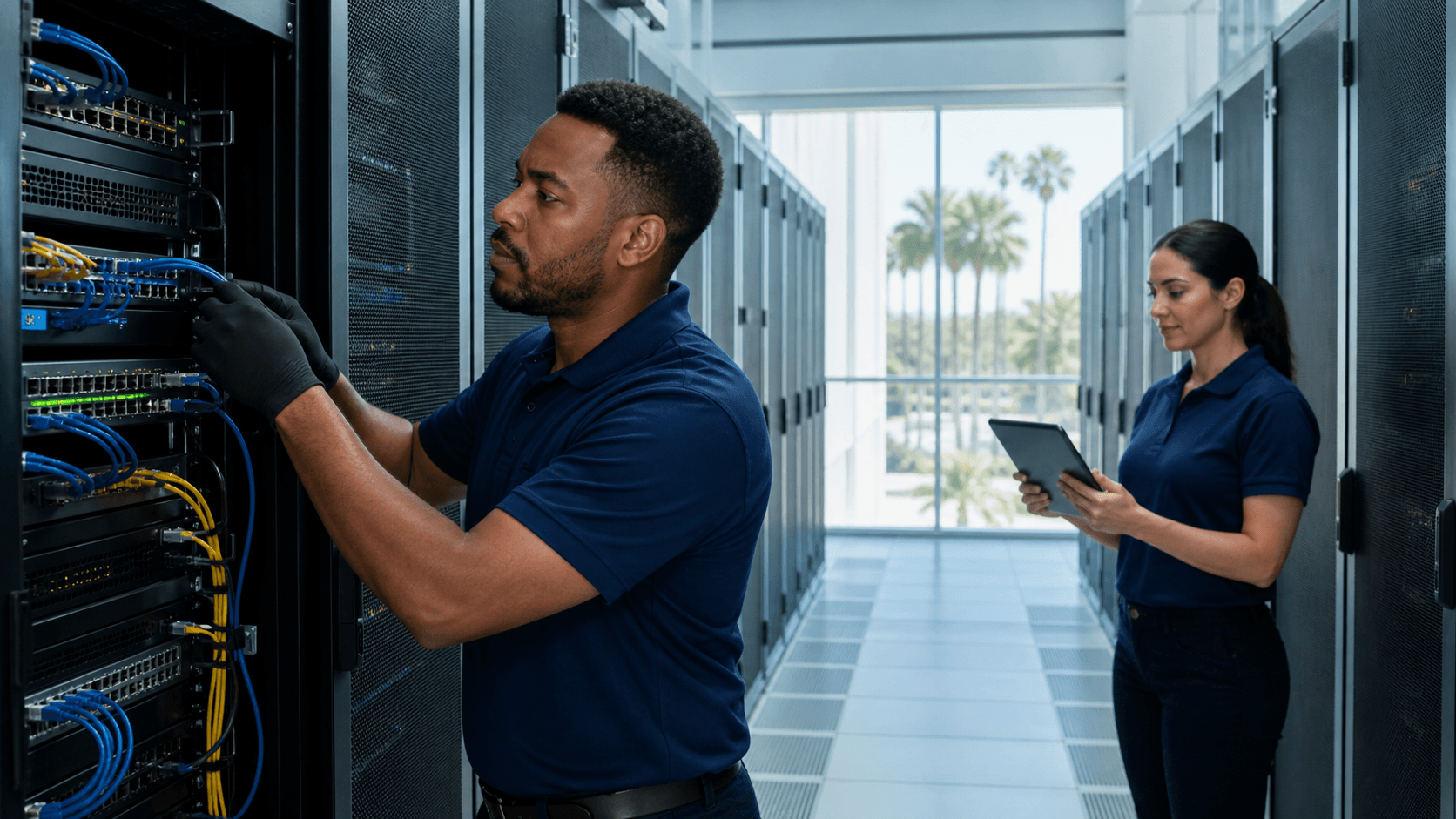
Fast, Local, Reliable: Rethinking LA Workloads This Fall
Los Angeles IT teams feel the pressure as fall hits. Streaming picks up, sports and entertainment events stack up, and online shopping ramps toward the holidays. SLAs get tighter while users expect apps and content to respond instantly, no matter how many people are online at once.
That is where an edge data center provider can help. By keeping servers, storage, and key services closer to LA users, teams can keep latency low, performance steady, and capacity easier to plan. In this article, we will talk about what edge really means, which LA workloads benefit most, how it compares to traditional colocation, and what to look for in a local partner that actually supports your team.
What an Edge Data Center Provider Really Delivers
When people say "edge," it can sound like a buzzword. In simple terms, an edge data center provider puts compute and data storage close to your users. For LA workloads, that means your traffic stays in the metro area instead of bouncing across the country before coming back.
A strong LA edge facility typically offers things like:
- Local network interconnects to carriers and cloud on-ramps
- High-density power to support modern servers and GPUs
- Enterprise-grade cooling to keep gear stable under heavy loads
- On-site smart hands support so changes do not always require your staff on-site
The real difference shows up when you compare this to a huge, distant hyperscale data center. Those large sites can be great for some centralized workloads, but they are not always focused on flexibility for specific metro areas. A boutique Los Angeles edge data center provider can:
- Adjust cabinet layouts and power as your footprint grows
- Work with you on custom SLAs that match your business needs
- Provide high-touch advisory help instead of just selling space
So you are not just renting a cage. You are gaining a local operations base that is tuned to LA users and LA conditions.
Which LA Workloads Truly Benefit From the Edge
Not every workload needs to live at the edge, but some get clear wins from staying close to Los Angeles users.
Workloads that usually see the biggest gains include:
- Streaming media libraries and content delivery platforms
- Ad-tech systems that run time-sensitive auctions and tracking
- Gaming platforms where every millisecond of latency matters
- Creative production and post-production pipelines moving large files
- Real-time analytics, dashboards, and monitoring tools
For many LA media and entertainment companies, data residency and contract rules also matter. Having content and services in-region can make it easier to satisfy partner expectations and internal risk teams. Local edge capacity supports on-site reviews, secure transfers, and clear lines around where data actually lives.
Business continuity is another big factor. In Southern California, wildfires and power grid events are a real part of planning. When you keep mission-critical apps or services in a local edge data center built with resiliency in mind, you get:
- Better options for backup power and cooling than most office sites
- Space to host failover gear that stays near your users
- A hub for disaster recovery playbooks and hands-on support
Seasonal traffic spikes make this even more important. Fall sports, new show releases, live events, and holiday promotions all stack together. If traffic jumps for a few days or weeks, having burstable resources and network capacity inside the LA metro can keep user experience steady while your team maintains its sanity.
Edge vs. Traditional Colocation for Growing IT Teams
Many growing IT teams already use some form of colocation. The question is how an edge data center provider fits into that mix.
On the capacity side, edge providers often support flexible cabinet options and incremental power growth. That can help you match real usage without overcommitting. Traditional colocation in distant facilities may feel more rigid, with contracts that assume slow, predictable growth and fewer changes in layout.
Operationally, the difference can be large. Long drives to remote data centers eat into your team's time and energy. With a local LA facility, you can pair short travel times with:
- Smart hands support for installs, reboots, and quick checks
- Help with hardware sourcing when you need gear on-site fast
- Local knowledge of building operations and site specifics
This matters a lot for lean IT teams that do not have staff to spare for all-day site visits. Faster on-site help often means shorter downtime and less overtime.
On the network and architecture side, edge is one part of the picture, not the whole thing. You still may want certain workloads in centralized facilities or in public cloud regions, especially those that:
- Are batch-oriented or not latency sensitive
- Require global reach more than local responsiveness
- Are already deeply tied into managed cloud services
A thoughtful hybrid approach lets you keep latency-sensitive pieces in LA while using centralized or cloud options for the rest.
How to Evaluate an LA Edge Data Center Partner
Choosing an edge partner is about more than power and floor space. It starts with location and design, but service quality and long term fit matter just as much.
Key things to check include:
- Location inside the LA area and how easy it is to reach from your offices
- Building resiliency, including how the facility is built and maintained
- Power redundancy and how the site handles extended grid issues
- Cooling design that supports your current and future rack densities
- Security controls that line up with your company's standards
Service quality can make or break your experience. Ask about:
- Response SLAs for remote hands and incident handling
- 24/7 on-site technicians versus on-call only support
- Remote management tools for monitoring power, temperature, and access
- Experience working with growing IT teams that need advice as well as space
Future-proofing matters too. As your stack evolves, you might need:
- Higher density racks for GPU heavy or AI workloads
- Flexible cross-connect options for new carriers or partners
- Multi-site business continuity plans that include secondary locations
- Clear paths to integrate with public cloud or network providers
A good edge data center provider will talk through these topics openly and help you shape a plan that fits how your IT strategy is likely to grow, not just what you need this quarter.
Turning LA Latency Into a Competitive Advantage This Year
Before year-end planning gets too busy, it helps to map where everything actually lives today. Many teams are surprised when they trace network paths and see how far traffic travels before it reaches LA users. Reviewing incident history side by side with that map often reveals hot spots where a local edge presence could lower risk.
One practical way to start is with a small pilot. Move a focused set of latency-sensitive LA workloads into an edge data center, such as a core streaming service, a key analytics dashboard, or a high-traffic application. Then track performance, user experience, and how many late-night drives your team does or does not need to make. From there, you can decide which additional workloads belong closer to LA and which should stay in centralized or cloud environments.
As a boutique Los Angeles colocation and advisory provider, we built DataHub Innovations around this kind of flexible, local-first approach. Our team works with growing IT groups that want scalable data center space, smart hands, hardware sourcing help, and business continuity options that match how LA actually works. With the right edge strategy, LA latency is not just a problem to fix, it becomes a way to deliver better digital experiences when it counts most.
Get Started With Your Project Today
If you are ready to bring compute and storage closer to your users, our team at DataHub Innovations is here to help architect the right solution. As a trusted edge data center provider, we collaborate with you to align performance, scalability, and resilience with your business goals. Share your requirements with us so we can map out a practical deployment roadmap and timeline tailored to your environment. Let's start planning the next stage of your infrastructure evolution together.