Why Remote Hands Support Matters for LA Businesses
Remote hands data center services help keep your systems running when your team cannot be on site. When you colocate your servers in a facility, you still need someone to press the power button, move a cable, or check a flashing light at 2 a.m. That is what remote hands is all about, and it matters even more for Los Angeles businesses that run long hours and depend on always-on apps and data.
LA companies face busy seasons, heavy online traffic, regional power concerns, and days when roads and schedules make it hard to get to the data center. Growing IT teams often cannot justify building out their own on-premises space with power, cooling, and strong physical security. Colocation paired with strong remote hands gives you the infrastructure and the people without having to expand your own building.
Instead of stretching a small IT team across town, more local businesses lean on colocation providers that offer flexible support. A boutique provider can learn how your environment works and respond in a way that feels like an extension of your own staff. That is the role we focus on at DataHub Innovations as a Los Angeles-based colocation partner for partial and full cabinet customers.
What Remote Hands Data Center Services Actually Include
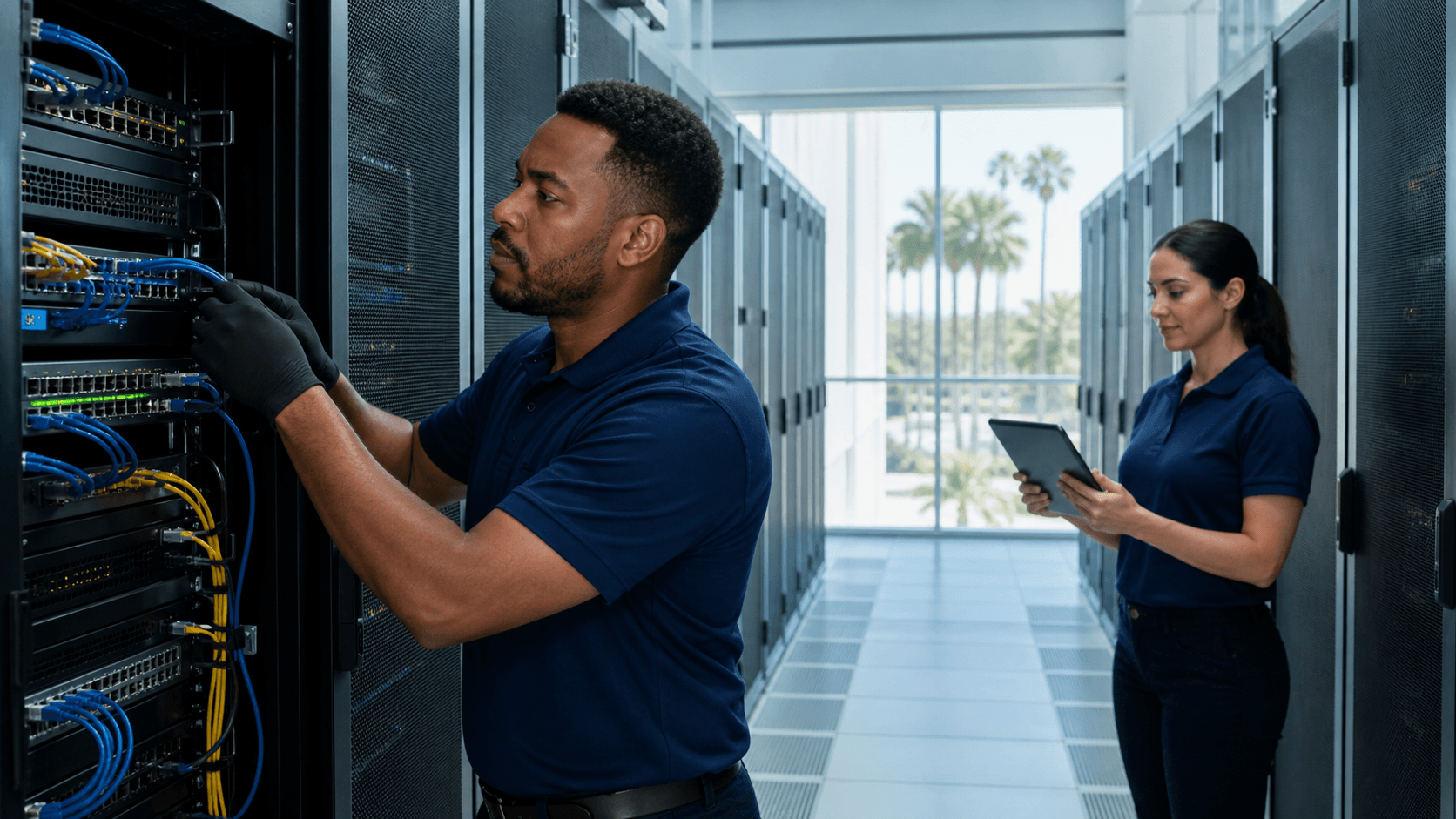
Remote hands sounds simple, but it covers a clear set of physical tasks that your internal team might not be able to perform on site. At a basic level, you are asking trained technicians in the data center to be your hands and eyes on the floor.
Core remote hands services often include:
- Physical server reboots or power cycles
- Cable moves, adds, and changes for network or power
- Racking and stacking new hardware in your space
- Swapping media like drives or removable storage
- Basic hardware checks and simple troubleshooting on your behalf
Beyond those core moves, many IT teams depend on extended services that save time and reduce trips across the city. These can include:
- Inventory checks, so you know exactly what is installed in each cabinet
- Visual inspections to confirm lights, alerts, or signs of hardware issues
- Escorting third-party vendors that need access to your gear
- Helping coordinate incoming shipments and returns of equipment
Remote hands is not the same as full managed services. With remote hands, your team still owns the design of the environment, the operating systems, the apps, and the deeper troubleshooting. The data center team follows your instructions, works from your runbooks, and reports back what they see. Managed services go further, taking on ongoing monitoring, high-level planning, and direct changes to your systems according to a broader agreement. Knowing where one stops and the other starts helps you set clear roles, tickets, and service level expectations.
How Remote Hands Support Keeps You Resilient Year-Round
As summer rolls into fall in Los Angeles, online activity does not slow. You still have seasonal promotions, back-to-school traffic, entertainment events, and holiday planning already starting. Energy demand can stay high, wildfire risk is still part of life, and many teams are split between the office, home, and travel.
In that mix, remote hands support keeps your environment steady even when your key people are not near the facility. Around-the-clock technicians can act quickly when every minute of uptime matters. This is especially helpful during:
- Peak traffic events, where any downtime hits revenue and reputation
- Seasonal marketing pushes that call for quick network or capacity changes
- After-hours maintenance windows when your own team prefers to work remotely
Think about a sudden hardware failure in the middle of the night. With strong remote hands, you can open a ticket, have a technician confirm the fault, replace a cable or drive if you have spares in your cabinet, and give you real feedback right away. If you are rolling out a seasonal campaign, you might pre-plan a set of network changes that remote hands can perform during a late-night window so your team does not have to sit in the cold aisle.
When people are on vacation or working flexible hours, remote hands becomes a safety net. Your staff can focus on planning, security, and application performance while the physical work on cabinets, power strips, and patch panels is handled on site.
Evaluating Remote Hands Quality in an LA Colocation Facility
Not all remote hands data center services feel the same. The quality of the support depends on who is doing the work and how they communicate. When you tour a colocation facility in LA, it helps to ask pointed questions about the remote hands program.
Key things to look at include:
- Technician experience with server, network, and storage hardware
- Response time targets for standard and urgent tickets
- How they document tasks, photos, and changes on your equipment
- How often they update you during an incident or long maintenance
Security is another big part of the story. You want to know how access to your cabinets is controlled and tracked. Ask about access logs, how they confirm which tasks are approved, and what steps they take before they touch anything. Many IT leaders build an authorization list so only named contacts on your side can request certain actions.
For many LA companies, working with a boutique provider feels different than working with a huge national operator. A more focused, local team can get to know your environment, your quirks, and your patterns. That can mean more thoughtful questions, clearer handoffs, and less back-and-forth when time is tight.
Building a Smart Remote Hands Playbook with Your Provider
Remote hands works best when it is guided by a clear playbook, not random one-off requests. The more you and your provider agree up front, the smoother things go during a rush or an incident.
A strong playbook usually includes:
- Standard operating procedures for common tasks, step by step
- Escalation paths for when things do not go as planned
- A list of pre-approved tasks that technicians can perform right away
- Clear rules on when to call, when to email, and when to open a ticket only
It also helps to line up your remote hands plan with your IT roadmap. If you know you will refresh hardware next year or add more capacity, you can work ahead on racking plans, labeling standards, and spare parts staging. That way, when new gear arrives, technicians can install and cable it without a long planning cycle.
At DataHub Innovations, we take time to review ticket history and incident notes with customers. Over time, patterns appear, like repeated requests for the same kind of cable change or visual check. We use that feedback to refine runbooks, adjust cabinet layouts, and improve how quickly we can act on your behalf.
Next Steps to Strengthen Your LA Data Center Strategy
A good first step for any IT leader in LA is a simple self-check. Look at when your team is actually available to be on site, how you handle after-hours events, and where you feel the most stress around physical changes in the data center. Those gaps often point straight to where remote hands can help.
Before you tour any colocation facility, build a short checklist focused on remote hands data center services. Include questions like: Who will be touching our equipment? How fast do you commit to respond? How do you document work? How do you confirm who is allowed to request certain tasks? Also ask how remote hands ties in with their business continuity offerings, so you can see the full picture of support during regional issues.
At DataHub Innovations, we work with LA enterprises and fast-growing startups that want scalable colocation with hands-on support. By pairing flexible cabinet options with thoughtful remote hands and advisory services, we help teams keep their focus on strategy while we handle the on-site work that keeps the lights on and the packets flowing.
Optimize Your IT Operations With Expert On-Demand Support
If you are ready to stabilize uptime and reduce the strain on your in-house team, our remote hands data center services are built to step in quickly and reliably. At DataHub Innovations, we handle routine tasks and urgent incidents so your staff can stay focused on strategic initiatives. We work with you to customize the level of support you need, from occasional assistance to fully managed on-site interventions. Reach out today so we can review your requirements and outline a practical plan for consistent, responsive support.